How to Ask for a Robot Cell Quote
You Can Actually Compare
What to send, what a complete quote includes,
and what "turnkey" does and doesn't cover.
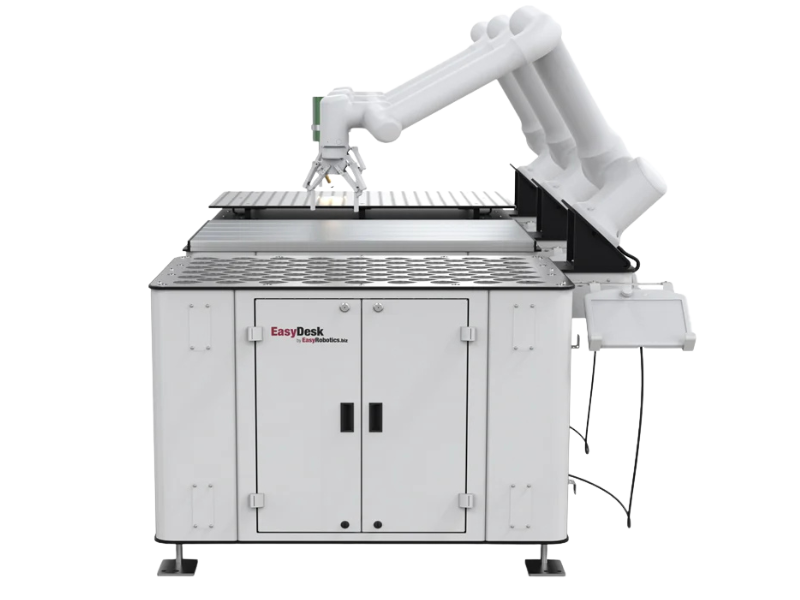
Plenty of robot cell projects stall at the quote. The request is vague ("how much for a palletizer?"), the answer that comes back is hard to compare with the other one, and everyone loses a few weeks working out what was actually being priced.
A quote is only as good as the information behind it, and it's only comparable if you know what's in it. Both are easy to get right once you know what a robot cell is made of. Here is how to ask for one properly, and how to read what you get back.
Two quotes for the "same" cell can differ by the price of a robot. Check what's actually in the scope before you compare totals.
What a Robot Cell Is Made Of
An industrial robot cell isn't one product. It's a stack of parts, and a quote can include any combination of them. Knowing the list is half the work.
• The robot arm
Sometimes supplied by the cell builder, sometimes by you or a partner.
• The mounting platform and adapter
The base or pedestal the robot sits on, plus the robot-specific adapter plate between the two.
• The gripper or tool
Matched to the part, and its weight counts against the robot's payload.
• Part supply
A feeder, tray system, conveyor interface or pallet positions, depending on the job.
• Safeguarding
Guarding, scanners or light curtains, and the risk assessment behind them.
• Controls and software
I/O, programs, pallet patterns or recipes.
• Installation, commissioning and training
Getting it anchored, running, validated and handed over to the people who'll use it.
Send the Right Information
The more precisely the request describes the job, the less guessing sits inside the price. What matters differs by application, so here are the essentials for the three most common.
💡 What to Include
• Palletizing: box dimensions and weight, pallet size, target stack height, conveyor height and required production rate
• Machine tending: the machine make and model, part size, weight and material, batch size, cycle time, and how long it should run unattended
• Welding: part size and weight, the welding process, batch sizes and whether fixtures already exist
• Every job: preferred robot brand if you have one, available floor space, a layout or photos, and your shift pattern
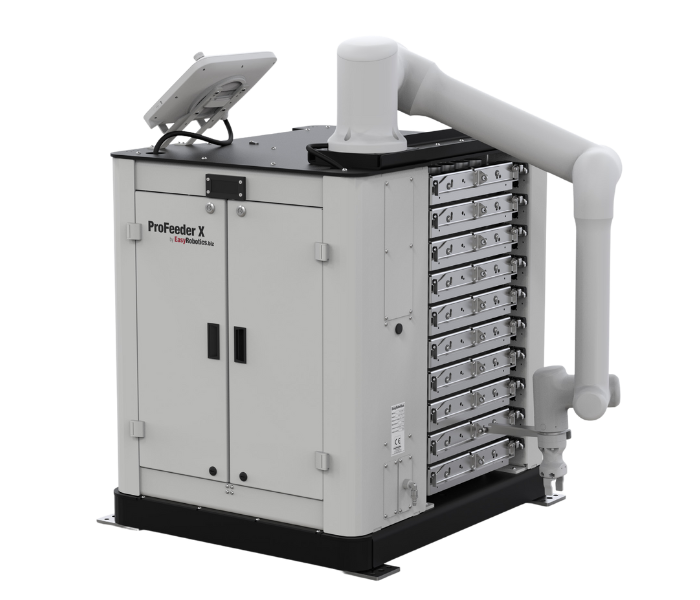
For a tending cell, machine details and part data drive most of the scope
A photo of the machine and the floor space around it often answers questions faster than a page of description. If you have a rough sketch of where the cell would sit, send it.
Reading the Quote: What's In and What's Out
When the quote arrives, check it against the list above, line by line. The product pages on this site show why it matters. For the EasyPalletizer, the platform is not a commissioned palletizing cell by itself, the robot-specific adapter plate is ordered separately unless the quotation includes it, and the quotation defines the complete scope. That's an honest description of how many cell platforms are sold, and exactly the kind of detail a vague quote hides.
✅ Confirm Each of These Is In or Out
• The robot, and which model
• The adapter plate and the gripper
• Part supply: feeder, conveyor interface or pallet positions
• Safeguarding and the risk assessment
• Software, programming and pattern or recipe setup
• Floor anchoring, installation and commissioning
• Operator training and documentation
• Service, spare parts and lead time
If an item isn't mentioned, assume it's excluded until the supplier says otherwise. It's a more reliable habit than assuming it's included and finding out at delivery.
What "Turnkey" Really Means
"Turnkey" is used loosely. At its strictest it means one supplier is responsible for the whole cell, from design through commissioning. At its loosest it means a standard platform is shipped and the rest is up to you.
Neither is wrong, and each suits a different buyer. A standard platform keeps the cost and lead time down when the job is familiar. A fully responsible supplier makes sense when you want one name accountable. What matters is knowing which one you're being offered, and asking exactly which parts of the project the supplier is responsible for.
EasyRobotics builds standardised cell platforms and sells them through a partner network and directly. For unusual parts, layouts or processes, a customised solution is available. If you're deciding between a supplier, a distributor and an integrator, our buying guide explains what each one does.
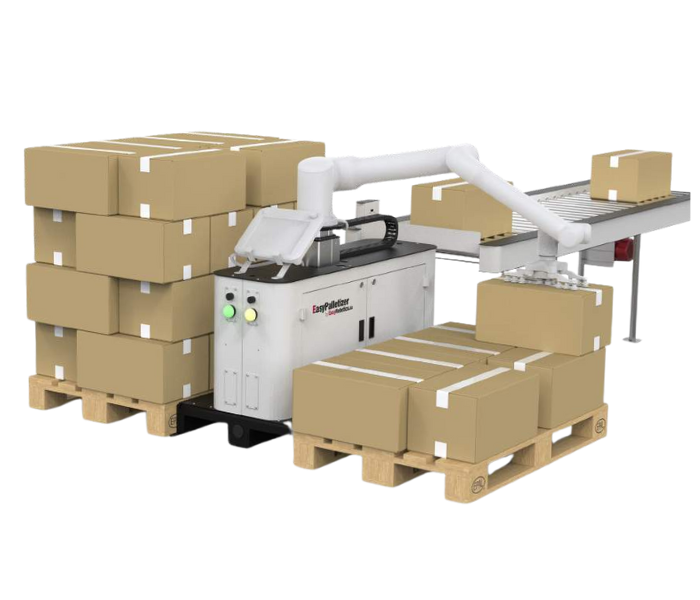
A platform is one component. The quote should say what surrounds it
Warning Signs in a Quote
A few things should slow you down. A price with no mention of safeguarding, for a job where safety obviously matters. A "price per robot" with no scope. Commissioning described in one vague line. And for a complex job, a quote that arrived without anyone asking about your layout. We cover why that last one matters in the palletizer safety guide.
Also ask whether they've delivered this exact application before, and whether you can speak to that customer. A confident answer is a good sign. Hesitation tells you something too.
Frequently Asked Questions
Conclusion
A good quote starts with a clear request and ends with a clear scope. Describe the part, the rate and the layout, then check every line of what comes back against the parts a robot cell is made of.
Do that and comparing suppliers becomes simple. The cheapest quote is rarely the one that leaves the most out, and a quote that spells out its scope usually means a supplier who has thought it through.
Ready to Request a Quote?
Tell an EasyRobotics specialist about your part, rate and layout.
You'll get a configuration and a scope that spells out what's included — at no charge.