Robotic Adhesive Dispensing: A Practical Guide
to Cobot Dispensing Automation
How cobot dispensing systems eliminate bead variation, cut material waste, and deliver
consistent bonding quality across every part — every shift.
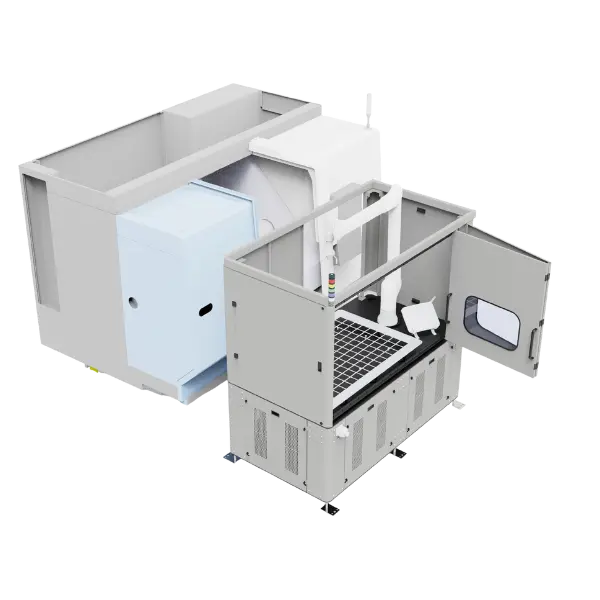
Of all the manual tasks in a production facility, adhesive application is among the hardest to control. The operator holds a gun, traces a path, and squeezes a trigger — and the result depends entirely on their speed, pressure, angle, and fatigue level at that precise moment. Two parts assembled three hours apart may have meaningfully different bead profiles. One joint holds. One fails in service. The quality escape that follows is expensive, and the root cause is almost never identified as the dispensing step — because no one logged what the adhesive bead actually looked like.
This is the problem that robotic adhesive dispensing eliminates. A cobot following a programmed path applies exactly the same bead — same width, same volume, same start and end position — on part number 1 and part number 10,000. It does not speed up at the end of the shift. It does not apply extra material to compensate for uncertainty. It does not miss a corner because the previous task was distracting. The dispensed joint is identical, every time, because the motion that creates it is identical every time.
This guide covers how robotic dispensing systems work, which applications benefit most, what the economics look like across different production volumes, and how to specify a cobot dispensing cell that is genuinely fit for your material and your process — rather than a generic robot cell retrofitted to a dispensing task.
"We had a chronic rework problem in our bonding line — parts failing final inspection for adhesive coverage. Within two weeks of deploying the cobot dispensing cell, our rework rate dropped to zero. The adhesive path is now perfect on every part." — Lukas B., Quality Manager, EasyRobotics Customer
What Is Robotic Adhesive Dispensing — and How Does It Work?
Robotic adhesive dispensing is the use of a robot arm to carry a dispensing valve or gun along a programmed path, applying adhesive, sealant, or other fluid material to a workpiece in a controlled, repeatable manner. The robot controls four critical variables simultaneously: the path geometry (where the bead goes), the application speed (which affects bead width), the dispensing pressure or flow rate (which controls bead volume), and the start and end points of the dispensed bead (which determines coverage at joint edges and terminations).
These four variables interact. If a manual operator changes speed mid-path — which they always do on curves and corners — bead width changes unless the dispensing pressure changes proportionally to compensate. A programmed cobot path automatically synchronises the tool speed with the dispensing output, maintaining a consistent bead cross-section through straight runs, curves, inside corners, and outside corners without any operator intervention or skill requirement.
The hardware components of a robotic dispensing system are: the cobot arm (which provides the motion), the dispensing valve (which controls material flow — typically a needle valve, gear pump, or progressive cavity pump depending on the material viscosity), the fluid supply system (pressure pot, drum pump, or direct-from-cartridge feed), and the workpiece fixture (which positions the part repeatably so the programmed path aligns correctly with the actual joint location on every cycle).
On the EasyRobotics modular platform, the cobot, dispensing head mounting interface, and workpiece fixture are integrated into a single mobile cell that can be positioned at any point on the production floor and repositioned between jobs without structural modification. The dispensing path for a new part is programmed using the robot's standard teach pendant, typically taking 30–90 minutes for a new component depending on path complexity.
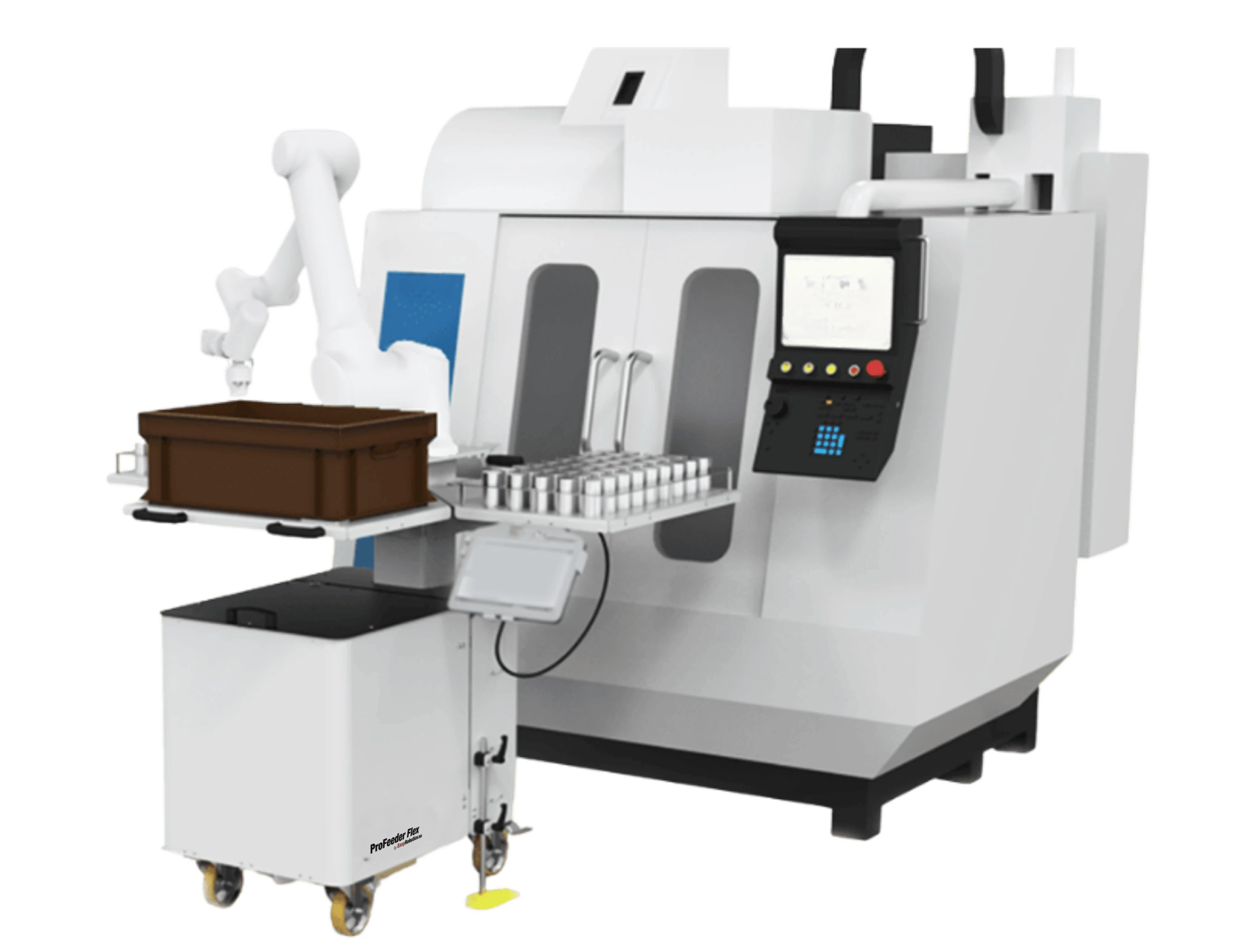
EasyRobotics cobot dispensing cell — precise path control for adhesive, sealant, and fluid application on complex 3D geometries
Why Manual Adhesive Application Fails — and What It Is Actually Costing You
The financial cost of manual adhesive dispensing is consistently underestimated — not because the numbers are small, but because they are spread across five separate budget lines that no one ever adds up together.
• Material Waste from Over-Application
When operators apply adhesive manually, they compensate for positional uncertainty by applying more material than the joint specification requires. If the nominal bead volume is 2 cm³ per joint and the operator applies 2.5–3 cm³ as a safety margin, the material waste on a production volume of 500 joints per day is 250–500 cm³ of adhesive — every day. At the cost of structural adhesive or silicone sealant, this often amounts to €8,000–€20,000 per year in wasted material from a single production line.
• Rework from Coverage Failures
The opposite failure — insufficient adhesive coverage in a critical joint area — is a quality escape that only surfaces at final inspection or, worse, in service. Rework of a bonded assembly is expensive: the adhesive must be removed, the surfaces re-prepared, and the joint re-dispensed and re-cured. Depending on the assembly complexity and cure cycle time, a single rework event can cost €50–€300 in direct labour and materials. For a line experiencing 5–10 rework events per week, the annual cost exceeds €25,000.
• Cycle Time Variability
A manual dispensing step introduces variation into the cycle time of the entire assembly line. An operator who takes 45 seconds on one joint and 70 seconds on the next creates a pacing problem for the downstream workstation. This variability is invisible on a per-part basis but accumulates into significant throughput loss when measured across a full shift — typically 8–15% lost capacity compared to a robotic dispensing cell running at a defined, consistent cycle time.
• Health and Safety Exposure
Many adhesive and sealant materials contain isocyanates, epoxy resins, or solvents that present inhalation and skin contact hazards with repeated operator exposure. Manual dispensing maximises operator contact time with these materials. A cobot dispensing cell removes the operator from the application zone entirely, eliminating the exposure and the long-term liability — including the personal protective equipment costs, health monitoring requirements, and ventilation engineering that repeated manual exposure necessitates.
• Skill Dependency and Training Cost
Consistent manual adhesive application is a genuine skill. Experienced operators who know the path, the right speed, and the correct trigger feel produce better results than new starters. This creates a knowledge dependency — output quality degrades when experienced people are absent and recovers slowly as new operators build experience. Every time a trained dispensing operator leaves, the training cost and the quality dip during the settling-in period represent a recurring expense of €4,000–€10,000.
💡 The Real Cost of Manual Dispensing — Consolidated
• Material over-application waste: €8,000–€20,000 per line per year
• Rework from coverage failures: €15,000–€30,000+ per year
• Throughput loss from cycle variability: 8–15% of line capacity
• HSE exposure and PPE compliance cost: €3,000–€8,000 per year
• Cobot dispensing eliminates all five — typically paying back in 8–12 months
Applications: Where Robotic Dispensing Delivers the Highest Value
Not every dispensing application has the same sensitivity to path accuracy or bead volume consistency. Understanding where the value is highest helps prioritise which process to automate first and what accuracy specification to set for the dispensing cell.
• Structural Bonding
Structural adhesive joints — epoxy, acrylic, or polyurethane bonds carrying mechanical load — are the highest-consequence dispensing application. Under-coverage at any point in the bond line creates a stress concentration that can lead to joint failure under dynamic or thermal loading. Robotic dispensing ensures full, consistent bond line coverage on every part, eliminating the failure mode that manual application introduces. Applications include automotive body bonding, composite panel assembly, and metal-to-metal structural joints.
• Seam Sealing and Weatherproofing
Silicone and MS polymer sealant beads on housing joints, enclosure seams, and waterproof assemblies must cover the entire joint length without voids or pin holes that compromise the seal. Manual sealant application is particularly prone to voids at corners and at the start/end of a bead run, where operator hesitation or repositioning interrupts the flow. A cobot follows the full perimeter path continuously, maintaining consistent pressure through every corner without the pause-and-restart that creates voids.
• Gasket Forming and FIPG Applications
Formed-in-place gasket (FIPG) silicone applications on engine housings, gearbox covers, pump covers, and similar components require a precisely volumetric bead of a specific cross-section — too narrow fails to seal, too wide squeezes into the internal cavity. This is the application where robotic dispensing payback is most rapid: material cost per joint is high, the rework consequence of a poor bead is significant, and the path geometry is complex enough that manual consistency is genuinely difficult to achieve and maintain over a production shift.
• Conformal Coating and Potting
Electronics assembly applications — conformal coating of PCBs, potting of connectors, underfill of BGA components — require precise area coverage and defined keep-out zones where coating must not be applied. These applications demand the accuracy of a programmed robot path. Any drift in the manual application boundary risks coating a connector that must remain uncoated, creating a failure at electrical test that requires full board rework.
• Lubrication and Thread Locking
Applying thread locking fluid, anti-corrosion compound, or bearing lubricant to a specific location on a component — a thread, a shaft shoulder, a bearing seat — is a precision dispensing task where dot volume and position are critical. Too much threadlocker causes joint removal difficulties in service. Too little leaves the joint under-secured. Robotic micro-dispensing delivers the defined dot volume to the defined position on every part, regardless of shift or operator.
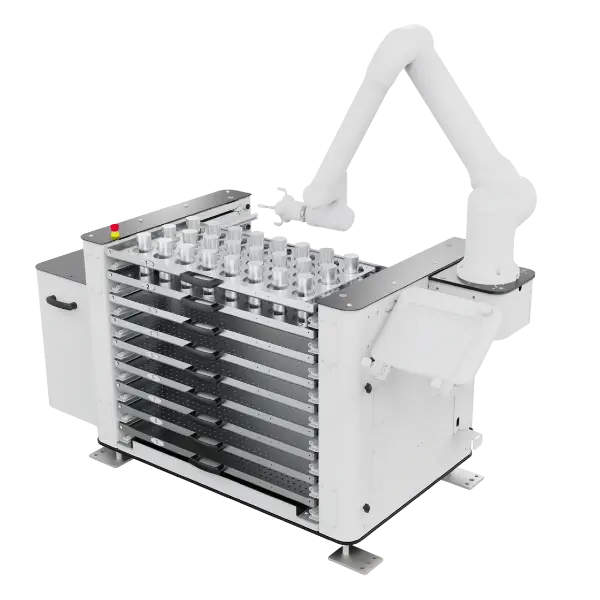
Cobot structural adhesive dispensing — consistent bead geometry on complex automotive panel bonding paths
Specifying a Cobot Dispensing System: The Five Questions to Answer First
Robotic dispensing cells vary significantly in specification depending on the material, the path, the production volume, and the accuracy requirement. Getting these five questions answered before contacting any supplier ensures the proposal you receive is genuinely matched to your process — not a standard system adapted to fit.
1. What material are you dispensing — and what is its viscosity?
Material viscosity dictates the dispensing valve technology. Low-viscosity materials (water-like to light oil) can be metered with needle valves and pressure pots. Medium-viscosity materials (pastes, thick gels, structural adhesives) require gear pump or progressive cavity pump dispensers that positively displace a defined volume per cycle. High-viscosity materials — thixotropic sealants, heavy grease — need higher-pressure progressive cavity systems or heated hoppers to achieve consistent flow. Specifying the wrong valve type results in flow inconsistency that no amount of path programming can correct.
2. What bead geometry does the specification require?
Bead width, bead height, and bead cross-sectional area are the geometric outputs that the dispensing system must produce. These should come directly from the joint design specification or the adhesive supplier's application guidance. The combination of robot speed and dispenser flow rate is tuned to produce the specified geometry on the actual part. If the specification only states "cover the joint" without quantifying the bead, the first step before specifying any dispensing system is to quantify what "covered" actually means in measurable terms.
3. How complex is the dispensing path?
Simple straight-line beads on flat surfaces are the easiest case — path programming is fast and any cobot with adequate reach can handle them. Complex 3D paths on curved or compound-geometry surfaces, tight inside radii, or multiple dispensing orientations in a single cycle require a 6-axis cobot with sufficient reach and payload to carry the dispensing head through the full path without singularity. Path complexity also affects programming time: a 3D seam on a complex housing may take 2–4 hours to program accurately, while a flat-surface perimeter might take 30 minutes.
4. What is the production volume and cycle time requirement?
Cobot dispensing operates well from very low volumes (even one or two parts per hour in high-value applications) up to moderate volumes in the range of 30–80 parts per hour depending on bead length and path speed. For very high-speed applications requiring more than 100 parts per hour with complex paths, a traditional industrial robot may be more appropriate than a cobot. At the volumes typical of job shops and mid-size manufacturers, cobot dispensing is well-matched to the throughput requirement while offering the flexibility benefits of a collaborative platform.
5. How many different part types will the system handle?
A single-product dedicated dispensing cell can be configured and left running with minimal operator interaction. A high-mix cell where the part type changes frequently requires a programme selection interface — typically a simple touchscreen or barcode scanner that calls up the correct path programme for the part being loaded. EasyRobotics modular dispensing cells are configured for high-mix operation as standard, with operator programme selection taking under 30 seconds between part changeovers.
📋 Pre-Specification Checklist
☐ Material viscosity confirmed (cP or Pa·s at application temperature)
☐ Bead geometry specified (width × height in mm, or volume per unit length)
☐ Path geometry documented (2D flat, 3D curved, angular joints, inside corners)
☐ Cycle time requirement established (parts per shift or parts per hour)
☐ Part mix defined (single product or multi-programme with operator selection)
☐ Working environment considered (temperature, humidity, hazardous atmosphere classification)
Robotic Adhesive Dispensing vs Manual Application: The Accuracy Numbers
The accuracy advantage of robotic dispensing over manual application is not a marketing claim — it is a measurable, reproducible engineering characteristic that can be verified in minutes with a bead cross-section gauge or a simple weight-based volume measurement.
A Universal Robots UR5e or UR10e — among the most commonly used cobot platforms in EasyRobotics installations — has a TCP (tool centre point) repeatability of ±0.03 mm. This means that the dispensing nozzle tip returns to within 0.03 mm of the same position on every cycle. On a bead width of 6 mm, this is effectively invisible — the bead lands in the same location with no detectable variation.
Manual adhesive application, measured across a typical production shift, shows bead position variation of 1–3 mm, bead width variation of 15–40%, and bead volume variation of 20–50%. These are not edge cases — they are the normal distribution of human hand application under production conditions. When joint specifications have tight tolerances (as they do in structural bonding, FIPG applications, and electronics coating), this variation is the direct cause of the rework and warranty events that quality teams spend significant time investigating.
"Our sealant cost dropped 22% in the first quarter after we deployed the cobot dispensing system. We were over-applying on every part as a safety margin. The robot applies exactly what the specification calls for — nothing more." — Petra S., Manufacturing Engineer, EasyRobotics Customer
The ROI Calculation: How Cobot Dispensing Pays Back
The financial return on a cobot dispensing investment comes from four sources that compound together. The most powerful aspect of the dispensing ROI case is that two of the four savings streams — material waste and rework cost — are often invisible in the current cost structure because no one has measured the baseline precisely. Once the baseline is established, the case tends to be compelling.
Saving 1 — Material Waste Reduction
This is often the fastest payback stream and the easiest to quantify. Weigh the adhesive consumed per part before and after robot implementation. The robot applies only what the joint specification requires. Most operations see 15–30% material savings in the first month. On a line consuming 200 kg of structural adhesive per month at €12–€25/kg, that saving is €3,600–€18,000 per year from this source alone.
Saving 2 — Rework Elimination
Track the rework events associated with adhesive coverage failures for one month before implementation. Multiply the count by the average rework labour time and material cost. In most operations, this number is significantly higher than expected — because rework is typically attributed to "assembly quality" rather than "dispensing" in the defect log. A cobot dispensing system that eliminates coverage failures removes this cost entirely.
Saving 3 — Labour Redeployment
A cobot dispensing cell requires an operator to load and unload parts, but not to perform the dispensing itself. Where manual dispensing was a dedicated full-time role, the cobot frees that operator to take on value-added work — quality inspection, assembly tasks requiring judgement, or managing a second cell. The direct labour saving per cell depends on production volume, but for operations running multiple shifts, the saving is typically 0.5–1.5 FTE per cell per year.
Saving 4 — Throughput and Cycle Time Improvement
A robot dispenses at a defined, consistent speed. There is no warm-up period at the start of a shift, no slowdown at the end, and no variation between operators. For production lines where the dispensing step is on or near the critical path, removing cycle time variability at this station directly increases overall line throughput without adding headcount.
📊 Illustrative ROI Scenario — Structural Bonding Line
Application: Structural epoxy bonding, 400 parts/day, one dedicated manual operator
Annual material waste saving (25% reduction): €12,000
Annual rework elimination (8 events/month at €150 each): €14,400
Labour redeployment (0.5 FTE at €40,000/year): €20,000
Total annual benefit: €46,400
System investment (cobot + dispensing cell + tooling): €45,000–€60,000
Payback period: 12–16 months. Year 2+ delivers full annual saving.
Use the EasyRobotics ROI Calculator to model these savings against your specific adhesive consumption, rework rate, and labour costs. The tool generates a detailed payback timeline and five-year cumulative return figure for your operation.
Is Your Dispensing Application Right for Cobot Automation?
Cobot dispensing delivers the highest return in applications that combine moderate production volume with a defined, repeatable dispensing path and quality sensitivity to bead consistency. The following checklist maps to the strongest candidates.
✅ Strong Candidate for Cobot Dispensing If You Have…
• A defined adhesive, sealant, or fluid application path that repeats on every part
• Quality problems (rework, field failures) attributable to inconsistent manual application
• High adhesive material cost making over-application wasteful
• Production volumes of 50+ parts per shift at the dispensing station
• Operator health concerns around repeated adhesive material exposure
• A tight joint specification with measurable coverage requirements
• Multiple part types that could share a single dispensing cell on different programmes
⚠️ Consider a Customised Approach If…
• Part geometry varies significantly between units (no fixed dispensing path)
• Adhesive material requires a heated or multi-component mixing dispenser — contact EasyRobotics for customised automation assessment
• Dispensing must be performed inside a sealed hazardous atmosphere — specialist cell design required
Frequently Asked Questions
🔗 Related EasyRobotics Solutions
• Cobot Dispensing Solutions — full overview of EasyRobotics dispensing automation
• EasyWork Cobot Workstation — modular platform for dispensing, assembly, and inspection
• EasyDesk — configurable work surface for bench-level dispensing applications
• Customised Automation Solutions — bespoke dispensing cell design for complex applications
• Robotic Workstation Guide — how to choose the right cobot platform for any application
• ROI Calculator — model your dispensing automation payback period
Conclusion
Robotic adhesive dispensing is one of the most financially compelling cobot applications available to manufacturers today — precisely because the cost of the problem it solves is so consistently underestimated. Material waste, rework from coverage failures, quality escapes, health and safety exposure, and skill dependency are all real costs that manual dispensing imposes every day, on every line, without ever appearing as a single identifiable line item.
A cobot dispensing cell eliminates all of them simultaneously. It applies the specified bead — same position, same volume, same geometry — on every part, every cycle, without operator skill variation, without end-of-shift fatigue, and without the material over-application that manual operators use to compensate for uncertainty. The result is measurably better quality, lower material cost, and a consistent cycle time that the rest of the assembly line can be planned around.
For most applications, the payback period is 8–12 months. For high-material-cost or high-rework operations, it is considerably faster. If your current dispensing process has a quality problem, a material waste problem, or an operator consistency problem — it is almost certainly the right application to automate next.
Ready to Eliminate Adhesive Variation from Your Production Line?
Talk to an EasyRobotics dispensing specialist. Get a system recommendation,
a material compatibility review, and a payback calculation — at no charge.