Industrial Robot Integration and Manufacturing Automation Systems: Powering Industry 4.0 Growth
Industrial robot integration connects robots with the machines, tooling, and controls used in manufacturing. It can help automate repetitive tasks and support consistent production. As part of an Industry 4.0 strategy, connected manufacturing systems can also make production data available for monitoring and process improvement.
What Is Industrial Robot Integration?
Industrial robot integration involves selecting and configuring the robot, gripper, fixtures, machine interfaces, and control sequence for a specific task. These industrial robotics solutions need to work with the existing equipment and production flow. Installation also includes programming, commissioning, and operator training.
Typical applications include welding, assembly, material handling, and inspection. A useful starting point is a repeatable task with clear inputs, outputs, and quality requirements. The available space, part variation, cycle time, and maintenance needs help determine whether a proposed cell is suitable.
The Role of Manufacturing Automation Systems
Manufacturing automation systems combine robotics, software, and control equipment to coordinate production tasks. A project may automate one workstation or connect several stages of a line. The scope depends on how materials move, how machines communicate, and where operators need access.
Where the required sensors and data connections are available, manufacturers can monitor cycle times, stoppages, and output. This information can help identify bottlenecks and guide improvements. Data collection and reporting should be defined during planning so that the system provides information the production team can use.
What are the Benefits of Automation in Manufacturing?
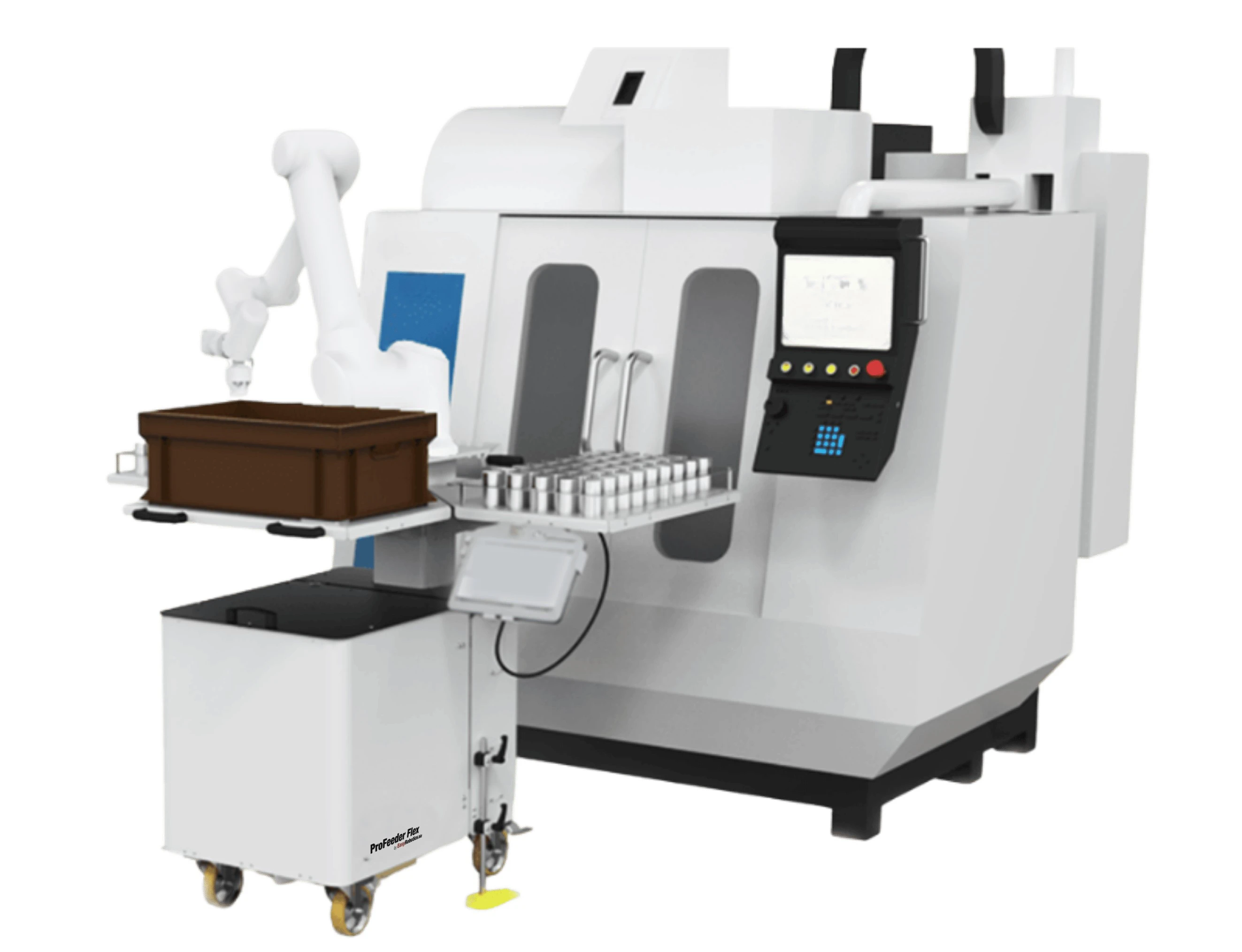
With CNC machine tending automation, a robot can handle repeated loading and unloading, reducing waiting time between machining cycles. Extended or unattended production depends on part supply, tool life, chip management, monitoring, and the reliability of the complete process.
Robots repeat programmed motions, which can support consistent handling and positioning. Product quality still depends on suitable tooling, fixtures, process settings, and inspection. Automation results should be checked against the required tolerances and acceptance criteria.
To assess cost efficiency, compare the total project cost with expected operating savings and achievable production gains. Include the robot, workstation, integration, training, maintenance, and energy use. Payback depends on the application and actual operating hours.
Automating suitable tasks can reduce repetitive lifting or handling by operators. The complete installation still needs an application-specific risk assessment that considers the robot, tooling, workpieces, nearby equipment, and how people interact with the cell.
Applications Across Industries
Industrial robotics applications span automotive production, assembly and testing in the electronics industry, packaged food handling, and pharmaceutical manufacturing. CNC automation is also used in metalworking and machining. Each application has its own handling, process, and quality requirements.
The same workstation concept may support different tasks, but the final configuration must account for the product and working environment. Robot payload, reach, tooling, machine access, and changeover requirements should be reviewed for the intended use.
Driving the Future with Industry 4.0
Industry 4.0 connects production equipment with information systems so that manufacturing data can support operational decisions. Industrial IoT, analytics, and, where appropriate, AI can complement robotics. The required interfaces and data functions should be confirmed for the selected equipment and software.
Start with a specific objective, such as tracking machine utilization or identifying recurring stoppages. Define the data needed, who will use it, and how it will support decisions. This gives connected manufacturing projects a measurable purpose alongside the physical automation task.
Plan Your Robot Integration Project
For a robot integration project, share the task you want to automate, machine make and model, part dimensions and weight, current cycle time, target output, and available floor space. Explore our custom automation solutions or discuss your requirements with EasyRobotics to review the workstation and integration scope.